
Renovating a Second Home in Israel: Costs, Permits and Process

A good renovation for a second home is shaped by how you’ll use the property, not by a standard upgrade list. When you’re renovating a second home in Israel, decide who will stay there, how often they’ll visit, and whether you plan to rent it out between stays. A home used for occasional family visits has different priorities from one used year-round or prepared for guests.
Making decisions from abroad can feel difficult when you don’t know who to call or how local work is coordinated. Set priorities before work is scoped, identify permit and technical questions early, and appoint a local point of contact to coordinate contractors and specialists.
This article explains how to match renovation choices to the home’s purpose, plan around costs and permit questions, and organize decisions and progress oversight from abroad. It also covers handover and ongoing care, so the property is ready for the way you intend to use it.
Table of Contents
Renovating a Second Home in Israel Starts With How You’ll Use It
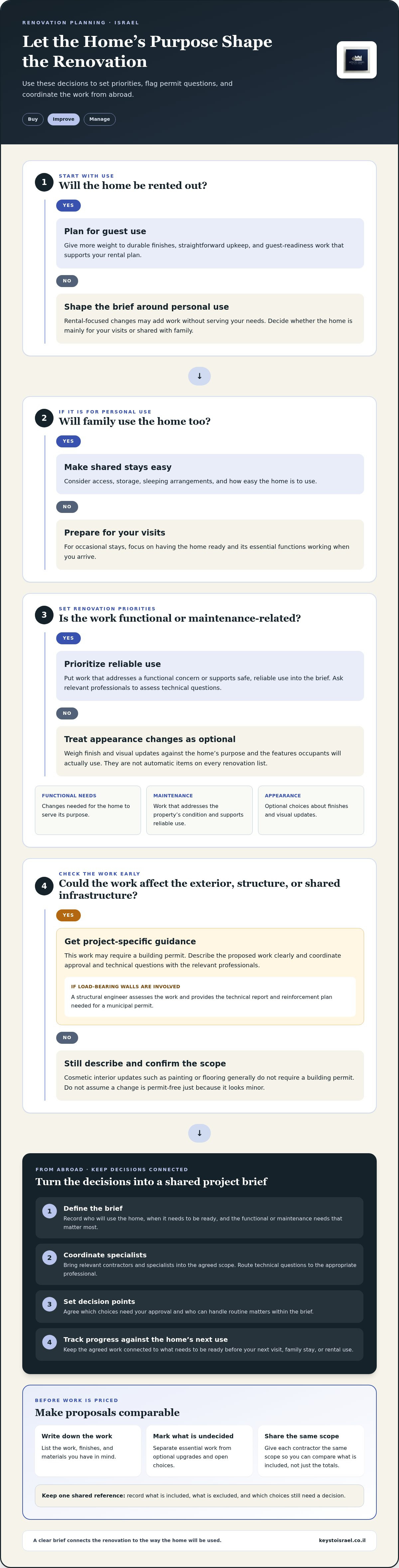
Before pricing work or asking whether a permit may be needed, decide who will use the home, how often, and for what purpose. A property used occasionally by its owner may need a different scope from one shared with family or prepared for rental. Write down the intended use before contractors assess the work.
A clear brief also makes cost planning more useful. List the work you want done, the materials or finishes you have in mind, and any decisions that still need to be made. Separate essential work from optional upgrades. If you’re comparing proposals, give each contractor the same scope so you can compare what is included rather than just the totals. Note questions that need a relevant specialist’s input before you commit to the work.
Will the home be for personal visits, family, or rental use?
How often you visit affects what matters day to day. For occasional stays, focus on having the home ready and its essential functions working when you arrive. For family use, consider access, storage, sleeping arrangements, and how easy the home is to use. If you plan to rent it, durable finishes, straightforward upkeep, and guest readiness may matter more.
These choices affect both the work and the materials. A written brief helps you distinguish items that serve the home’s intended use from preferences you could leave out or decide on later.
Which renovation priorities matter before cosmetic upgrades?
Start with functional concerns and maintenance needs, then weigh appearance improvements against the project’s purpose. Permit requirements depend on the proposed work. In Israel, cosmetic interior updates such as painting or flooring generally don’t require a building permit. Work affecting the exterior, structure, or shared infrastructure may require one. Changes to load-bearing walls require assessment by a structural engineer, who provides the technical report and reinforcement plan needed for a municipal permit.
Don’t assume a change is permit-free just because it looks minor. Describe the proposed work clearly and coordinate project-specific approval and technical questions with the relevant professionals. For renovating a second home in Israel, separate required work, permit-related questions, and optional upgrades in the scope. That gives you a clearer basis for planning costs and making decisions from abroad.
What Should a Second-Home Renovation in Israel Include?
A useful renovation scope separates three kinds of work: functional needs, maintenance, and optional appearance improvements. The right mix depends on the home’s condition and how you plan to use it, not on a standard upgrade list.
Use the comparison below to decide what belongs in the brief. It’s a planning tool, not a technical assessment.
Work category
What to consider
How intended use affects it
Functional needs
Features or changes needed for the home to serve its purpose.
Personal visits, family stays, and rental use may each call for different layouts or everyday conveniences.
Maintenance
Work that addresses the property’s condition and supports reliable use.
A home left empty between visits may need different upkeep priorities from one used frequently or rented.
Appearance improvements
Optional choices about finishes and visual updates.
Weigh these against the project’s purpose and the features occupants will actually use.
How do you separate essential work from optional upgrades?
Essential work supports safe, reliable use or addresses a functional concern. What qualifies depends on the property, so have technical questions assessed by the relevant professionals. Appearance-led changes are choices to weigh against the home’s purpose, not automatic items on every renovation list.
Record the agreed scope, including what is included, what is excluded, and which choices still need a decision. This gives you and the local team a shared reference as work is coordinated, particularly when you’re making decisions from abroad.
How should rental plans change the renovation brief?
If you plan to rent the home, durability and straightforward upkeep may deserve more attention. Include guest-readiness work only if rental is part of your plan. If the property is for personal or family use, rental-focused changes may add work without serving your needs.
Approvals and technical requirements depend on the specific work and property. Keys to Israel coordinates contractors and specialists around the agreed scope, keeping project decisions connected. If the home will be rented, property management after renovation can support the next stage of ownership. For help planning the work, a conversation about your property can be a practical starting point.
How to Coordinate a Second-Home Renovation in Israel From Abroad
A second home may sit empty between periods of use. The renovation plan should account for what needs to be ready before your next visit, who else may use the property, and what will happen while it’s unoccupied. Coordination is more than tracking construction. It connects the agreed work to the home’s next use.
Use this sequence to keep the project focused on practical needs:
Define the brief. Record who will use the home, when it needs to be ready, and which functional or maintenance needs matter most.
Coordinate specialists. Bring the relevant contractors and specialists into the agreed scope. Route technical questions to the appropriate professional.
Set decision points. Decide which choices need your approval and who can handle routine matters within the brief.
Track progress against use. Organize updates around agreed work and readiness for the next planned use, rather than treating every update as a new decision.
Review handover. Compare completed work with the scope, record outstanding items, and prepare the property for personal, family, or rental use.
What decisions should an overseas owner settle early?
Clarify the home’s intended use, priorities, scope boundaries, and who can make routine decisions. For a property used intermittently, consider what must be in place before the next visit or planned rental. Identify questions that need specialist input, and document approvals or changes so the owner and project team have the same understanding.
How does a local coordinator help keep work moving?
A local point of contact can coordinate communication and follow-up around your agreed priorities. Keys to Israel manages renovations for newly bought and long-owned properties, coordinating a vetted team of contractors and specialists to keep work aligned with the agreed standards, budget, and schedule. You can stay involved in key choices without having to connect every local conversation yourself. Still looking for the right home? Start with our guide to buying property in Israel as a foreigner.
For a second home, renovation coordination in Israel links the project brief to the property’s planned use and handover. The process should fit the specific home and your preferences.
Renovation to Ready Home: Handover and Next Steps
Handover is a practical review, not just the point when contractors finish. Compare completed work with the agreed scope and the home’s intended use. Record outstanding items, decisions, and follow-up so you know what remains before the property is ready for its next use.
What should the owner review before using the property?
Review the work against the project brief and note anything unresolved. Confirm that practical arrangements, such as access and information needed to use the home, are clear. Keep the review specific to the project. If a technical question needs an expert’s judgment, involve the relevant specialist rather than relying on a general checklist.
For an overseas owner, a written record makes open items easier to follow up on from abroad. It also gives everyone a shared understanding of what is complete and what still needs attention.
What happens after the renovation is complete?
The next steps depend on who will use the property. For your own visits, make sure the home is ready for your arrival and decide how it will be checked between stays. For family use, confirm that practical arrangements and information are in place. If you plan to rent it, prepare for guest use and connect handover to ongoing property management.
A home that sits empty between visits may still need planned inspections and maintenance. Agree who will follow up on property needs and how issues will be communicated. This creates continuity after the renovation work ends. Keys to Israel coordinates renovation work and supports the transition to ongoing property management for overseas owners.
Successful renovating a second home in Israel means planning for more than the construction phase. If you’re weighing renovation priorities or planning a handover, talk with Keys to Israel about your property.
Build a Renovation Plan That Works From Afar
The strongest renovation plan starts with the home’s purpose. Decide who will use it and how often, then shape the scope around functional needs, maintenance, and optional upgrades. This gives you a clearer basis for weighing costs and identifying questions that need input from relevant professionals.
For owners renovating a second home in Israel from abroad, a written brief, agreed decision points, and organized progress communication help keep the owner and local team aligned. Handover matters too. Review the work against the scope and plan what the property needs next, whether it’s ready for family visits, personal use, or rental.
Keys to Israel manages renovations for newly bought and long-owned properties, coordinating vetted contractors and specialists for overseas owners. That coordination can also connect renovation work to ongoing property management, giving you a local point of contact beyond the final work.
You don’t need every detail settled before discussing your plans. A clear conversation about the property and your priorities can help you work out a practical next step.
Frequently Asked Questions
Can I renovate a second home in Israel while living abroad?
Yes. You can stay involved from abroad when responsibilities, approvals, and updates are clearly organized. Keys to Israel manages renovations for newly bought and long-owned properties, coordinating vetted contractors and specialists around the agreed scope. The right arrangement depends on the property, the work, and how involved you want to be. Document decisions so you and the local team share an understanding of priorities and changes.
What should I renovate first in a second home?
Start with the home’s intended use and condition, then identify functional needs and maintenance concerns before weighing optional appearance upgrades. A property used occasionally may need different work from one shared with family or prepared for rental. There’s no universal order for every home. Set priorities in a written brief, and involve relevant specialists when you need technical input about the property or proposed work.
How much does it cost to renovate a second home in Israel?
There’s no useful single cost without understanding the property’s condition, the agreed scope, and your choices about finishes and priorities. A clear brief defines what the project includes and gives you a consistent basis for comparing proposals. An assessment of the property and proposed work can clarify the requirements for your specific project. Keys to Israel coordinates renovation work around the home and its intended use, rather than applying a generic scope.
How long does a second-home renovation in Israel take?
The schedule depends on the property, the work involved, the decisions required, and how the project progresses. Agreeing early on who handles routine decisions and which choices need your approval can help avoid preventable delays. Keys to Israel coordinates the renovation team and follows the work against the agreed schedule. Each project has its own timeline.
Do I need to be in Israel during the renovation?
You don’t necessarily need to be on site throughout the renovation. A clear brief, documented decisions, agreed approval points, and local coordination can help you manage the project from abroad. You may still want to take part in particular choices, especially those that affect the scope or intended use. Your level of involvement depends on the project and the responsibilities agreed with the local team.
What should I do after renovating a second home in Israel?
Review the completed work against the agreed scope, record unresolved items, and prepare the home for its intended use. If the property will sit empty between visits, plan for inspections and ongoing maintenance. If you’ll rent it, connect handover to guest preparation and ongoing management. Keys to Israel coordinates property management for overseas owners after renovation, helping carry the property’s care beyond the construction phase.


Comments