
Israel Apartment Renovation Costs: The 2026 Investor’s Budgeting Checklist

Updated: Sep 25
For many North American investors, the most expensive part of an Israeli renovation isn't the premium flooring or the custom cabinetry; it's the invisible "Anglo Tax" paid when you lack a local advocate. You've likely heard the unsettling stories of israel apartment renovation costs doubling overnight or contractors disappearing mid-project. It's difficult to feel in control when you're managing a project from thousands of miles away, especially while trying to navigate the fluctuating conversion between USD or CAD and the New Israeli Shekel. You deserve a transparent look at the market before you commit your capital.
This guide will demystify the financial landscape for 2026, giving you the clarity needed to protect your property investment. We'll provide a granular, room-by-room cost checklist that accounts for modern labor standards and material inflation. You'll learn which specific upgrades offer the highest return on investment and how professional oversight can bridge the geographical gap. By the end of this article, you'll have a realistic roadmap to transform your "fixer-upper" into a high-yield asset without the typical stress of long-distance ownership.
Table of Contents
The 2026 Landscape of Israel Renovation Costs
Understanding the Israeli "shiputzim" market requires looking past the surface. In Israel, a renovation is rarely just a cosmetic facelift; it's often a deep structural overhaul. Older apartments, particularly those built before the 1990s, frequently hide outdated galvanized piping and electrical grids that don't meet modern safety codes. When you purchase an older unit, you aren't just buying a floor plan; you're inheriting decades of local construction history that requires professional modernization.
As we move into 2026, the market outlook is defined by two major factors: global supply chain shifts and local labor availability. While material costs for essentials like ceramics and cement have stabilized compared to the volatility of previous years, specialized labor remains at a premium. Keeping a close eye on israel apartment renovation costs is essential for any investor who wants to maintain a healthy margin on their rental yield.
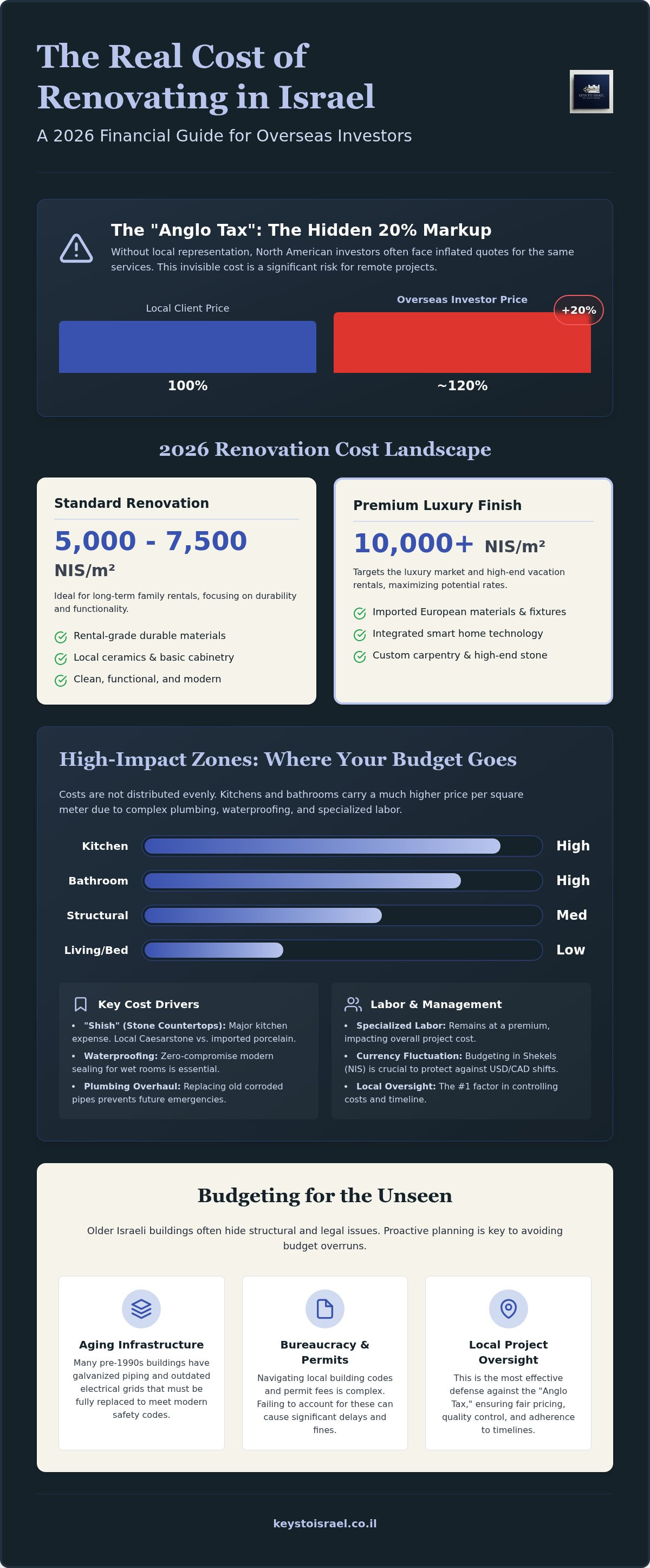
A common pitfall for North American owners is the "Anglo Price" markup. Without a local representative to vet bids and manage the project, foreign investors often face a 20% increase in quotes. Contractors sometimes perceive overseas owners as having less market knowledge or a higher tolerance for delays, leading to inflated pricing for the exact same labor and materials provided to locals. For 2026 projects, a standard renovation typically ranges from 5,000 to 7,500 NIS per square meter, while premium luxury finishes generally begin at 10,000 NIS per square meter.
Why Investors are Doubling Down on Older Stock
Investors often find the greatest financial opportunity in "as-is" properties in historic neighborhoods like Katamon or Neve Tzedek. There's a significant value gap between unrenovated shells and modernized units in these prime areas. Upgrading the core infrastructure doesn't just improve aesthetics; it prevents the maintenance emergencies that can plague remote owners. For help selecting a property with the right structural potential, consult our Israel property purchase coordination guide.
Standard vs. Premium: Defining Your Finish Level
Deciding on your finish level is a strategic choice that dictates your future tenant profile. A standard finish focuses on rental-grade durability, utilizing local ceramics and basic cabinetry. It's clean, functional, and ideal for long-term family rentals. Conversely, a premium finish targets the luxury market or high-end vacation rentals. This level includes:
Imported European materials and fixtures
Integrated smart home technology
Custom carpentry and high-end stone countertops
The ROI for "clean and functional" finishes is often higher for long-term stability, while "designer boutique" upgrades are necessary to command premium nightly rates in tourist hubs like Tel Aviv or Jerusalem.
The Room-by-Room Renovation Cost Checklist
Budgeting for a project from abroad requires a granular understanding of where your capital actually goes. In the Israeli market, costs aren't distributed evenly across the floor plan. A kitchen or bathroom renovation involves complex plumbing, waterproofing, and specialized stone work that carries a much higher price point per square meter than a bedroom or living area. Breaking your budget down room-by-room allows you to prioritize high-impact upgrades that drive rental value while identifying "invisible" infrastructure needs that protect your long-term investment.
Kitchen and Bath: The High-Impact Zones
The kitchen is typically the most expensive area of any Israeli apartment renovation. Beyond cabinetry, the primary cost driver is the "Shish" (stone countertop). While local brands like Caesarstone are world-class and often more cost-effective, importing boutique porcelain slabs can significantly increase your israel apartment renovation costs. It's vital to choose materials that balance aesthetic appeal with the durability required for a high-end rental.
Bathrooms require a "zero-compromise" approach to waterproofing. Israeli construction standards have evolved, and modern "wet rooms" now utilize advanced sealing layers to prevent leaks into neighboring units. When updating these spaces, we recommend a total plumbing overhaul. Patching into old, corroded pipes is a common mistake that leads to property management nightmares down the road. For a modern finish, investors are increasingly opting for "hidden tank" toilets and large-format tiling, which create a clean, minimalist look that appeals to premium tenants.
Structural and Electrical Foundations
Your budget must also account for the unique structural realities of Israeli buildings. Moving walls in a modern apartment can be complicated if those walls are part of the "Mamad" (fortified safe room). These reinforced concrete structures require specialized tools and permits to modify. Additionally, upgrading to three-phase electricity is non-negotiable for 2026. Modern appliances, induction cooktops, and powerful multi-room air conditioning (Mazgan) systems will frequently trip a standard single-phase breaker, making this infrastructure upgrade a baseline requirement for any serious renovation.
Walls and flooring provide the most immediate visual ROI. Replacing dated, cracked Terrazzo with large-format porcelain tiles or high-quality parquet transforms the feel of the space. Finally, factor in the cost of professional plastering and painting. A "Shlicht" (textured plaster) finish is standard in many Israeli homes, but modern investors often prefer smooth, skim-coated walls for a more contemporary, international gallery feel. If you're feeling overwhelmed by these technical choices, our team can provide renovation management to ensure every detail meets North American standards.
Remote Management: The "Hidden" Costs of Distance
Managing a renovation from New York or Toronto introduces financial variables that local owners rarely consider. Currency fluctuation is often the most significant silent budget killer. A 5-10% shift in the USD/NIS or CAD/NIS exchange rate during a six-month project can add thousands to your total israel apartment renovation costs without a single change in scope. You must budget in the local currency while maintaining a buffer in your home currency to absorb these market movements.
Communication gaps represent another tangible financial risk. When instructions are "lost in translation" with a local Kablan, the cost of fixing an error is always higher than the cost of doing it right the first time. We've seen owners lose weeks of progress because a contractor misunderstood a North American electrical preference or a specific plumbing fixture requirement. For a deeper look at these logistical hurdles, read our remote renovation management guide.
The "Oversight Multiplier" is a term we use to describe the value of local representation. While hiring a project manager is an additional line item, it's a protective measure that prevents contractor delays and overcharging. A seasoned manager knows the fair market price for labor and ensures you aren't paying a premium simply because you're calling from an international area code.
Managing the "Kablan" (Contractor) Relationship
Establishing a professional boundary with your contractor is vital. In Israel, the standard payment schedule is strictly milestone-based. You shouldn't pay more than 10-15% upfront. This initial payment covers mobilization and initial materials. Subsequent payments should only be released after a specific phase, such as demolition or plumbing, is completed and inspected. We ensure every contractor we work with is fully licensed and carries the necessary insurance to protect your asset. Keys to Israel acts as your physical presence, ensuring the person you hired is actually the one performing the work.
Budgeting for Contingencies and Surprises
Every Israeli renovation requires a robust contingency fund. While a 10% buffer is standard in North America, we recommend the "15% Rule" for Israeli projects. Apartments built between the 1950s and 1970s often hide structural surprises, such as unstable sub-flooring or deteriorating concrete, that only become visible after demolition begins. To manage these surprises, we utilize digital oversight tools. You don't need to be in Jerusalem or Tel Aviv to see the progress. We provide weekly high-resolution video walkthroughs and detailed photo logs of infrastructure before it's covered by plaster. This level of transparency ensures that "hidden" costs don't remain hidden until the end of the project.
Bureaucracy and Building Codes: Legal Budget Killers
In the Israeli market, the physical construction is often simpler than the administrative hurdles. If your renovation involves structural changes, such as removing a load-bearing wall or altering the exterior facade, you must account for municipal permit costs (Hetterim). These permits don't just add to the timeline; they require professional architectural plans and engineering signatures that can significantly impact israel apartment renovation costs. Ignoring these requirements isn't a viable strategy, as the municipality has the power to halt construction and issue heavy fines that complicate future resales.
National urban renewal schemes like Tama 38 and Pinui Binui also dictate your renovation logic. If your building is currently in the late stages of a Pinui Binui negotiation, investing heavily in premium finishes is a poor financial move, as the building may be slated for demolition. Conversely, if a Tama 38 project is imminent, you might need to coordinate your private interior work with the building-wide upgrades to avoid redundant labor. Understanding these local dynamics is essential for protecting your capital.
Navigating the Municipal Permit Process
Architectural fees for structural permits vary between Jerusalem and Tel Aviv, reflecting the different complexities of local building codes. While your apartment is under heavy renovation and "unfit for habitation," you can often apply for a temporary exemption from municipal taxes (Arnona). This requires a specific inspection and formal filing. Cutting corners by performing "illegal" renovations without permits is a common mistake that leads to massive financial penalties or "exceptions" (harigut) on the property title. For a detailed breakdown of compliance steps, consult our renovation rules and building codes guide.
Building Committee and Neighbor Relations
The Va’ad Bayit (Building Committee) is a powerful entity in Israeli apartment living. You must budget for hallway protection and the legal permits required for a debris container (Mekola) on the street. If you don't manage neighbor relations proactively, "neighborly friction" can lead to reported noise complaints or municipal inspections that stall your project for weeks. Sometimes, a renovation triggers the need for building-wide infrastructure upgrades, such as sewage or water line improvements, which the Va'ad Bayit may expect you to partially fund. Managing these social and legal complexities requires a steady local hand. To ensure your project remains on track and within budget, consider partnering with Keys to Israel for renovation management.
Maximizing ROI: From Renovation to Rental
The ultimate goal of analyzing israel apartment renovation costs is to ensure your capital produces a competitive yield. A renovation is not an end in itself; it's a strategic bridge between an outdated "as-is" property and a high-performing rental asset. To succeed in the 2026 market, your project must transition seamlessly from a construction site to a professional hospitality or long-term residential environment. This shift requires a different mindset, focusing on tenant-facing features that command premium rates while minimizing future maintenance overhead.
Transitioning from construction to management is a critical phase where many remote investors stumble. It's vital to recognize that your contractor is not your property manager. While they're skilled in infrastructure and finishes, they lack the incentive or expertise to handle tenant relations, lease agreements, or ongoing maintenance. Keeping these roles separate ensures your renovation is inspected with a critical eye before the final payment is released and the unit enters the rental market.
Design Choices That Drive Rental Income
In the 2026 market, specific technological and aesthetic choices directly impact your bottom line. For overseas owners, smart locks and remote-access climate control are essential. These tools allow you to manage access for cleaners, tenants, or maintenance crews from your smartphone, reducing the need for physical key handovers. We recommend high-durability, neutral finishes that appeal specifically to the "Anglo" rental demographic. This group often seeks a familiar, North American level of comfort and finish within an Israeli urban setting.
Don't underestimate the "Instagrammability" factor. In neighborhoods like Tel Aviv or Jerusalem, high-quality lighting and premium flooring drive significantly higher Airbnb rates. Professional-grade photography of a well-lit, modern space can increase click-through rates on booking platforms by 20% or more. These relatively small investments during the renovation phase pay for themselves through higher occupancy and premium nightly yields.
The Keys to Israel Advantage
Our role is to act as your protective advocate throughout the entire investment lifecycle. We provide a vetted network of contractors who understand international quality standards and respect the need for budget adherence. Beyond the physical work, we offer transparent reporting and financial coordination to ensure your investment remains tax-efficient and legally compliant. We manage the transition from the final coat of paint to the first signed lease, allowing you to enjoy the benefits of Israeli property ownership without the logistical headaches. Schedule a consultation with David Bitton to discuss your 2026 renovation project and learn how we can secure your property's future.
Securing Your Israeli Property Assets for 2026
A successful renovation in Israel requires more than just a good eye for design; it demands a strategic understanding of local infrastructure and market realities. By prioritizing core structural updates and planning for currency fluctuations, you protect your capital from the common pitfalls that often inflate israel apartment renovation costs. Whether you're modernizing a historic unit in Jerusalem or a coastal flat in Tel Aviv, the difference between a high-yield asset and a financial drain usually comes down to the quality of your local representation.
Our team specializes in bridging the gap between North American expectations and the local construction landscape. With a vetted contractor network and a permanent presence on the ground, we ensure your project meets professional standards without the stress of long-distance management. You don't have to navigate these complex logistical and legal hurdles alone. Protect your investment with professional Renovation Management and turn your vision into a rental-ready reality today. Your property deserves the oversight of a trusted local ally.
Frequently Asked Questions
How much does it cost to renovate an apartment in Israel per square meter in 2026?
Standard renovations in 2026 generally cost between 5,000 and 7,500 NIS per square meter, while premium luxury projects often start at 10,000 NIS. These figures include labor and materials but exclude high-end imported appliances or custom furniture. It's important to remember that israel apartment renovation costs vary based on the age of the building and the complexity of the infrastructure upgrades required to meet modern safety and electrical standards.
Do I need a permit for a standard internal apartment renovation in Israel?
You don't usually need a permit for cosmetic internal changes like painting, flooring, or replacing a kitchen in the same location. However, any structural modification requires a municipal permit (Hetter). This includes moving load-bearing walls, altering the "Mamad" (safe room), or changing windows and exterior doors. Performing structural work without a permit can lead to significant fines and legal complications when you eventually decide to sell the property.
How do I avoid the "Anglo Tax" when hiring an Israeli contractor?
Avoiding the "Anglo Tax" requires having a local representative who understands the nuances of the Israeli construction market. Contractors may quote higher prices to foreign investors because they assume a lack of local price knowledge. You can mitigate this risk by obtaining multiple bids, verifying market benchmarks, and utilizing a professional management service. A local advocate ensures that you pay the same fair market rate as any resident in Jerusalem or Tel Aviv.
What is a "Kablan" and how do I choose the right one from abroad?
A "Kablan" is the Hebrew term for a contractor, and choosing the right one requires looking beyond the initial quote. You should verify their professional license (Rishum) and ensure they carry comprehensive insurance for both workers and third-party damages. From abroad, it's best to hire a Kablan through a trusted local management partner who has a history of vetted results. This provides a layer of accountability that's difficult to maintain from overseas.
Can I manage an Israeli apartment renovation from New York or Toronto?
You can certainly manage a renovation from North America if you have the right digital oversight and local support. Modern management involves weekly high-definition video walkthroughs and detailed photo documentation of all infrastructure before walls are closed. While you can't be there physically, these tools allow you to track progress in real-time. Successful remote management relies on a clear communication bridge between your expectations and the reality of Israeli construction.
What are the hidden costs of renovating an old apartment in Jerusalem?
Hidden costs in Jerusalem often stem from the city's historic building stock, where you may find deteriorating galvanized piping or outdated electrical grids. You must also budget for "Va'ad Bayit" (Building Committee) requirements, which might include repairs to shared stairwells or sewage lines triggered by your construction. Additionally, Jerusalem's strict exterior stone-cladding rules mean any window or balcony modification carries a higher price tag than in other Israeli cities.
How long does a full apartment renovation typically take in Tel Aviv?
A comprehensive apartment renovation in Tel Aviv typically takes between three and six months. Cosmetic updates might be completed in eight weeks, but structural overhauls involving new plumbing, electrical, and flooring require more time. Delays often occur during the finishing stage or while waiting for custom cabinetry and stone countertops. Factoring in a 20% time buffer is a pragmatic way to manage your rental income expectations and avoid frustration.
Is it better to buy a renovated apartment or a "fixer-upper" in Israel?
Buying a "fixer-upper" typically provides a better return on investment because it allows you to control the quality of the infrastructure and the choice of finishes. While a pre-renovated apartment is more convenient, you often pay a significant premium for someone else's design choices. Renovating a shell yourself ensures the plumbing and electrical systems meet 2026 standards, which reduces your long-term maintenance costs and increases the property's eventual resale value.


Comments