
How to Choose a Property Manager in Israel: A Complete Guide

Updated: 4 days ago
Did you know that under Israel's Fair Rental Law, a tenant can legally hire their own contractor and deduct the cost from your rent if you don't fix a burst pipe within 72 hours? It's a stressful reality for overseas owners who cannot simply hop on a plane to oversee a repair or argue with a utility company in Hebrew. You likely worry about "tourist pricing" for simple fixes or your property sitting vacant because you lack a trusted local network. Understanding how to choose a property manager in Israel is about more than finding someone to collect checks. It's about securing a coordinator who manages the entire professional ecosystem on your behalf. This 2026 guide breaks down the essential criteria for selecting a representative who understands 18% VAT implications, tax exemption ceilings, and the logistics of remote ownership. We'll examine the technical standards and professional benchmarks you need to protect your Israeli assets.
Table of Contents
The Hidden Risks of Remote Property Ownership in Israel
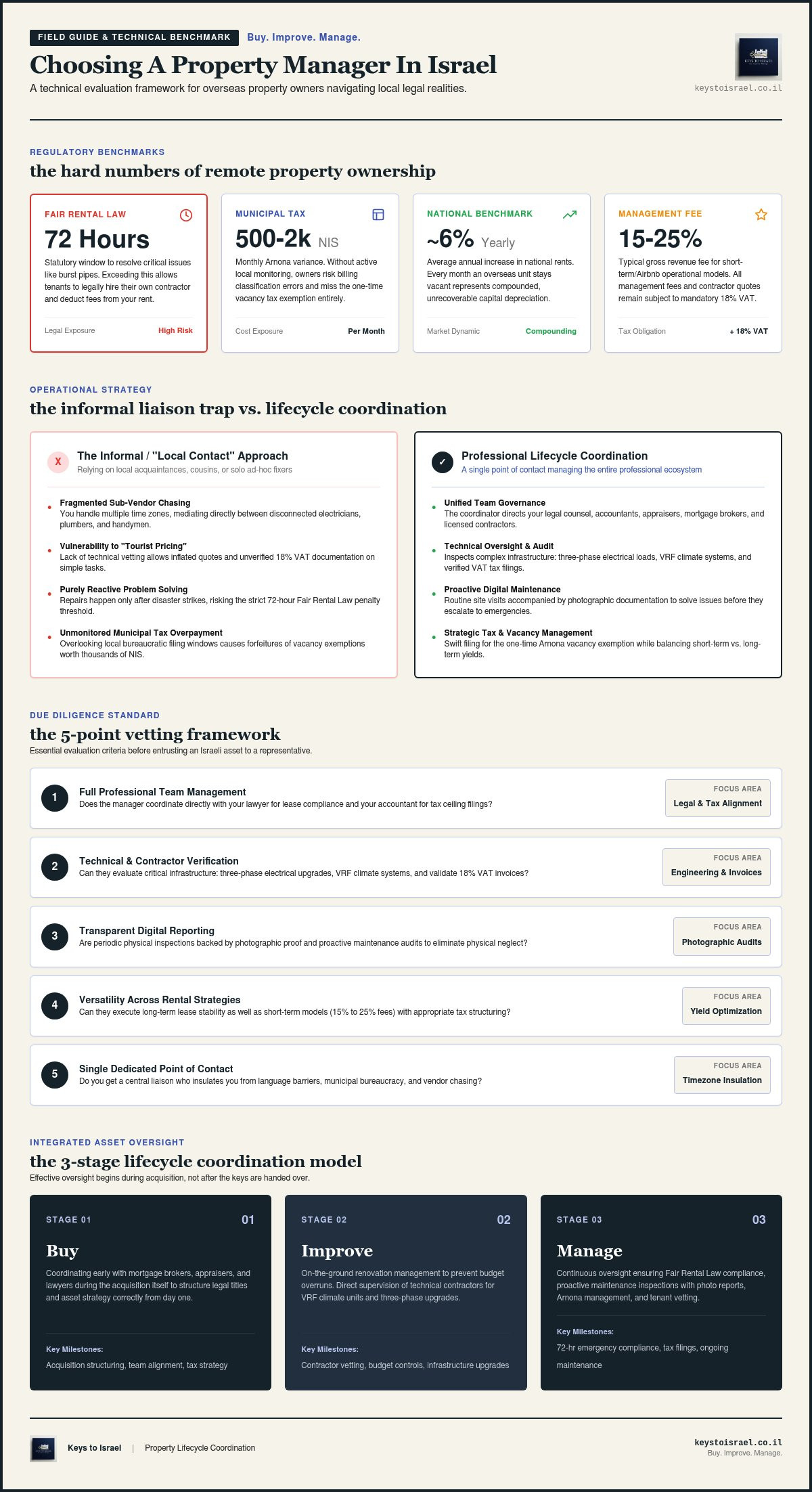
Owning property in Israel from abroad carries financial risks that go far beyond the initial purchase price. If a pipe bursts and isn't fixed within 72 hours, the Fair Rental Law allows your tenant to hire their own contractor and deduct the cost from your rent. This isn't just a minor inconvenience; it's a legal liability. Physical neglect leads to structural issues that erode your asset's value, while language barriers often mean you're paying incorrect Arnona (municipal tax) or utility rates. For instance, Arnona can range from 500 to 2,000 NIS per month. Without local oversight, you might miss the one-time vacancy exemption that could save you thousands.
Effective oversight requires adhering to professional property management standards and responsibilities to ensure your investment remains profitable. Inefficient tenant handling leads to high turnover. With national average rents rising by roughly 6% annually, every month of vacancy is a significant financial loss. Learning how to choose a property manager in Israel means finding someone who navigates these regulations and tax ceilings daily to protect your bottom line.
Why the DIY approach fails for overseas investors
Asking a local cousin or a friend to keep an eye on things often leads to strained relationships and inconsistent oversight. They aren't professionals. They won't vet a contractor's 18% VAT invoice or check if a VRF system was installed correctly. Managing a renovation from a different time zone usually ends in budget overruns and subpar finishes. The logistical gap exists because foreign owners expect a streamlined, digital process, but the local reality is a fragmented bureaucracy that requires a physical, persistent presence to navigate.
A 5-Point Vetting Framework for Choosing Your Local Representative
Finding a reliable partner requires looking beyond basic rent collection. A robust vetting framework for hiring a property manager should prioritize local coordination over simple administrative tasks. First, verify their ability to manage a full professional team. In Israel, this means they must coordinate with your lawyer for lease compliance and your accountant for tax filings. Second, ask how they vet contractors. A manager who doesn't understand technical requirements like three-phase electrical upgrades or VRF climate control systems cannot protect your asset's structural integrity.
Third, demand a clear reporting structure. Regular physical inspections are non-negotiable to prevent the neglect mentioned earlier. Fourth, assess their versatility. Whether you prefer the stability of long-term rentals or the higher yields of short-term Airbnb-style management, your representative must understand the different legal and tax implications for each. Short-term management typically commands 15% to 25% of gross revenue plus 18% VAT. To understand how to choose a property manager in israel who thinks long-term, see how it works with a comprehensive coordination model.
Assessing transparency and communication protocols
Communication is the most common point of failure in remote ownership. You need a single point of contact who manages all sub-vendors for you. This prevents you from chasing an electrician in one time zone and a plumber in another. Ensure they provide digital reports with photographic evidence of every inspection. Avoid managers who only react to problems; you want proactive maintenance oversight that identifies issues before they become expensive emergencies. This level of transparency ensures you remain in control without needing to be physically present.
Moving from Basic Management to Professional Lifecycle Coordination
Effective oversight starts long before a tenant signs a lease. If you wait until the closing date to find a representative, you've already missed the opportunity to align your legal and financial strategy. Professional property and asset management duties involve coordinating with mortgage brokers and lawyers during the acquisition itself. This ensures the asset is structured correctly from day one. When you determine how to choose a property manager in israel, look for a partner who understands the transition from purchase to renovation.
Renovation management is where many overseas owners lose significant capital. A coordinator acts as your eyes on the ground to prevent budget overruns and poor workmanship. They manage the technical specialists you cannot reach from abroad, ensuring the property is upgraded to meet modern market demands. This oversight transforms a simple apartment into a high-value, liquid asset that is ready for the rental market or your own eventual relocation.
Building a professional team that protects your investment
Success depends on the strength of your local network. You must ensure your Israel real estate legal coordination is integrated with your long-term property management for overseas owners strategy. This Buy, Improve, Manage lifecycle provides the stability needed for long-distance ownership. Beyond the numbers, maintaining a well-managed property keeps your connection to the homeland strong. It ensures that when you or your family return to Israel, the home is in pristine condition. This resilience is what turns a foreign investment into a permanent anchor in the land.
Securing Your Israeli Assets from Abroad
Remote ownership doesn't have to be a source of anxiety. By now, you understand that your property requires more than a casual keyholder; it needs a dedicated coordinator. Protecting your investment means staying ahead of the Fair Rental Law and managing a vetted contractor network before small repairs become major structural issues. Understanding how to choose a property manager in israel is about building a bridge between your home and your investment. You need a single point of contact who manages the full professional team of lawyers and engineers on your behalf. This lifecycle approach ensures your asset remains secure, maintained, and ready for your next visit. If you're ready to move from fragmented oversight to professional coordination, talk to us to see how we can protect your interests. Your connection to the homeland deserves a steady, local hand.
Frequently Asked Questions
What is the typical fee for property management in Israel?
Fees in Israel generally depend on whether the property is occupied or vacant and the level of coordination required. For long-term rentals, managers typically charge a percentage of the gross rent plus 18% VAT. Vacant properties often require a monthly retainer for inspections. It's important to ask for a breakdown of what's included to ensure you aren't paying extra for basic oversight tasks.
Do property managers in Israel handle taxes for foreign owners?
While managers are not tax advisors, a professional coordinator ensures you meet your obligations by working with certified accountants. They help navigate the 18% VAT on services and the residential rental tax exemption ceiling, which is 5,654 NIS per month through 2027. This coordination prevents costly penalties and ensures your filings are handled by local experts who understand the needs of foreign investors.
How often should a property manager inspect my vacant apartment?
A vacant apartment should be inspected at least once a month to prevent issues like mold or leak damage from escalating. During the winter rainy season, more frequent visits are often necessary to check for water intrusion. These inspections provide the digital evidence you need to feel secure. Regular oversight is a critical part of how to choose a property manager in israel who protects your assets.
Can a property manager in Israel oversee major renovations while I am away?
A manager with a renovation oversight specialty can manage major projects from start to finish while you are abroad. They assemble a vetted team of contractors and engineers to ensure the work meets technical standards and stays on budget. By acting as your single point of contact, they bridge the gap between your expectations and the local reality, preventing common renovation pitfalls.


Comments