
Israel Purchase Tax: 2026 Guide for Foreign Investors

Updated: Sep 25
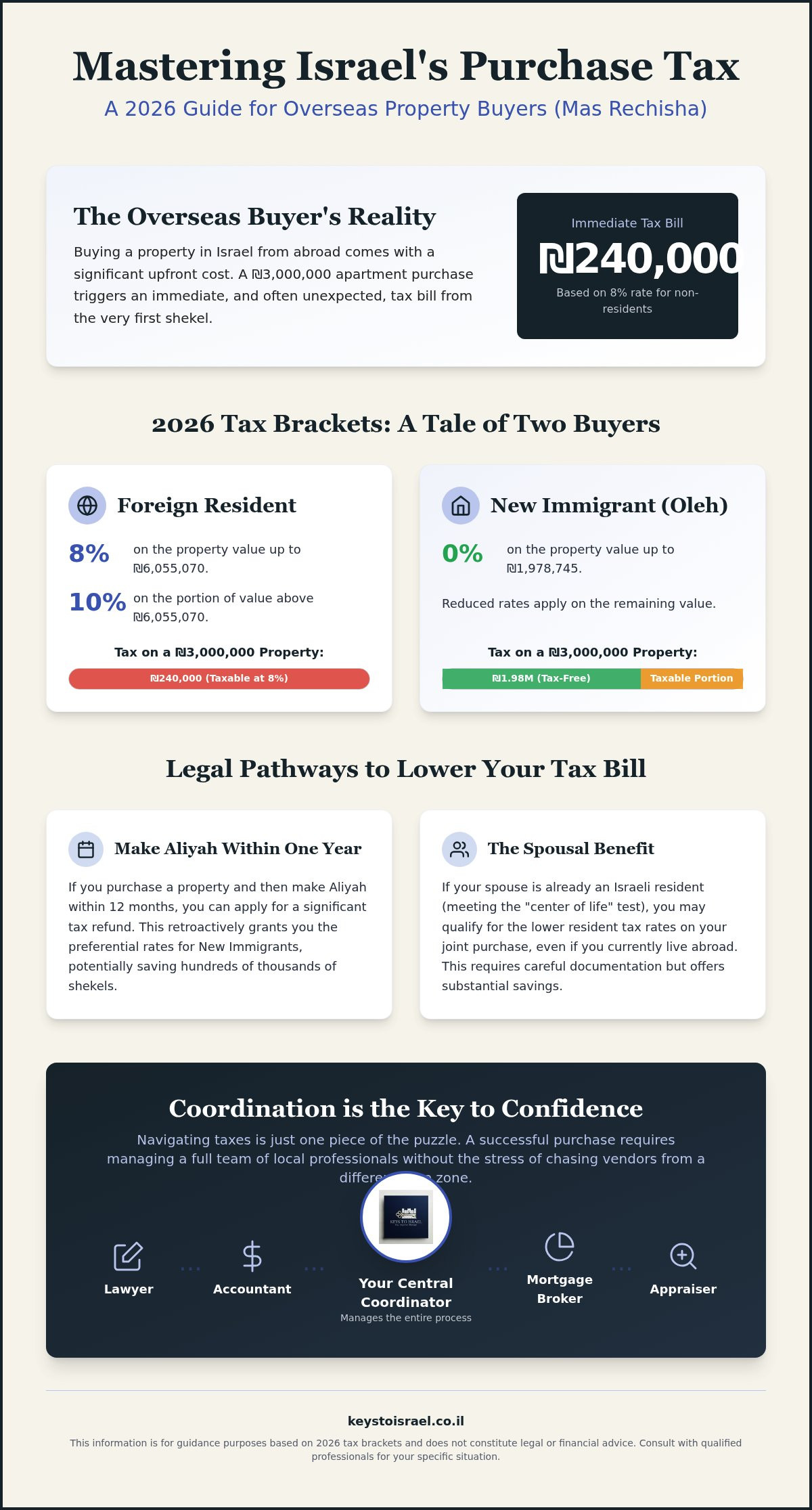
Buying a ₪3,000,000 apartment as an overseas buyer in 2026 triggers an immediate ₪240,000 tax bill. This 8% rate applies from the first shekel for non-residents, making the entry cost into the Israeli market significantly higher than for locals. It's a frustrating reality for many who want a home in Israel but feel penalized by current brackets. We understand the hesitation that comes with navigating these stakes without local language skills or a physical presence on the ground.
This guide will help you master Israel purchase tax for foreign residents so you don't overpay. You'll learn how the 2026 bracket freeze impacts your bottom line and how professional coordination can help you legally mitigate these costs. We will also explore how Aliyah or residency changes can lead to substantial tax refunds. By the end, you'll have a clear roadmap for managing Mas Rechisha without the stress of chasing local vendors yourself.
Table of Contents
The 2026 Mas Rechisha Brackets: Why Foreign Residents Pay More
Israel purchase tax, known as Mas Rechisha, is a staggered tax that changes based on your legal status and the property price. For 2026, the Israeli government has maintained a high entry barrier for overseas buyers. If you're a foreign resident, the law assumes you already own a primary residence elsewhere. This classification places you in the highest tax bracket from the very first shekel of the purchase price. It's a pragmatic system designed to prioritize local housing for residents.
The current fiscal policy has frozen tax brackets at 2024 levels through the end of 2026. As property prices rise, more of your investment naturally falls into higher tax tiers. The math for 2026 is straightforward:
8% on the portion of the property value up to ₪6,055,070
10% on the portion of the property value above ₪6,055,070
Non-resident investors contribute a significant portion of housing tax revenue. This leads to strict enforcement by the authorities. Understanding the broader framework of Taxation in Israel helps clarify why these rates remain high. The government uses these brackets to manage housing affordability for citizens while still welcoming global investment.
Defining Foreign Resident Status for Tax Purposes
The Israel Tax Authority doesn't just look at your passport to determine your bill. They use a "center of life" test to define your status. You're typically considered a foreign resident if you spend fewer than 183 days in Israel during the tax year. This 183-day rule is a primary metric, but they also evaluate where your family lives and where your main bank accounts are held. If you visit frequently but keep your primary assets abroad, you'll likely trigger the 8% Israel purchase tax for foreign residents. Having a local coordinator ensures your status is correctly filed to avoid expensive legal disputes.
Legal Pathways to Tax Mitigation: Aliyah and Spousal Rights
The 8% entry rate for foreign residents isn't always the final word on your tax bill. If your long-term plan involves moving to Israel, the tax landscape shifts significantly in your favor. Strategic timing is the key to unlocking these savings.
Specifically, if you make Aliyah within one year of your property purchase, you may be eligible for a significant tax refund. New immigrants (Olim) receive preferential rates that can save hundreds of thousands of shekels. In 2026, the first ₪1,978,745 of a property's value is taxed at 0% for Olim. To access this, your lawyer must coordinate directly with the tax office during the closing process. If you're unsure how these rules apply to your specific situation, see how it works through our coordination service.
Israeli residents buying their only home also pay much lower rates than the standard Israel purchase tax for foreign residents. These rates start at 0% for lower brackets, providing a clear path to savings for those establishing their lives in the country. Capturing these benefits requires a proactive approach before you sign the contract.
The Spousal Benefit: When One Partner is an Israeli Resident
Married couples often find relief if one partner is already considered an Israeli resident. If your spouse meets the "center of life" criteria, you may qualify for the lower resident tax rates even if you currently live abroad. This can drastically reduce your initial investment costs.
The tax assessor requires rigorous documentation to prove residency status. You must provide utility bills, local bank statements, and proof of health insurance to satisfy their requirements. Mas Rechisha is a mandatory closing cost that must be budgeted for at the start of any property search. Having a local coordinator manage these filings ensures you don't miss out on legal exemptions due to paperwork errors.
Coordinating Your Acquisition: Managing the Total Cost of Ownership
Buying property in Israel involves more than just the purchase price and the Israel purchase tax for foreign residents. You must account for several layers of professional fees to understand your total investment. This includes legal representation, mandatory property appraisals, and the oversight of the entire acquisition lifecycle. Budgeting for these costs from the start prevents financial surprises that can derail your planning mid-transaction.
The Israel Tax Authority requires you to pay your tax bill within 60 days of signing a binding agreement. Missing this window leads to immediate interest charges and heavy financial penalties. Professional oversight ensures that these deadlines are met without you having to monitor the calendar from another time zone. We manage the logistics so you don't have to chase individual service providers yourself.
The Role of a Purchase Coordinator in Tax Compliance
Having a single point of contact prevents the common frustration of being stuck between different professionals. We assemble a vetted team to handle your power of attorney and tax filings remotely. This coordination ensures your appraiser and lawyer are aligned. If an appraisal is too high, you might overpay tax based on an inflated valuation. A unified team prevents this. For a deeper look at the legal framework, review our guide on Israel real estate legal coordination.
Ultimately, investing in Israel is about more than tax brackets or logistical hurdles. It's about securing a permanent stake in the future of the homeland. Whether you're planning for Aliyah or strengthening diaspora ties, owning property here is a statement of historical resilience and a connection to your roots. Talk to us to see how we can protect your interests while you build your future in Israel.
Securing Your Stake in the Israeli Market
Managing Israel purchase tax for foreign residents requires more than just a calculator. It demands a local presence that understands the 2026 bracket freeze and the strict 60-day payment deadlines. You've seen how Aliyah benefits and spousal rights can significantly lower your bill, provided you coordinate the paperwork correctly. Don't let the fear of local bureaucracy or language barriers stop you from building your future in the homeland.
Under the leadership of local expert David Bitton, we act as your single point of contact throughout the Buy. Improve. Manage. lifecycle. We handle the professional team so you don't have to chase individual vendors from abroad. Talk to us about coordinating your Israel property purchase to ensure your investment is protected from day one. You can move forward with confidence knowing your interests are being guarded by someone on the ground.
Frequently Asked Questions
Is the purchase tax for foreign residents higher than for Israeli citizens?
Yes, foreign residents pay a higher tax rate because the Israeli system classifies them as investors who already own a primary home abroad. In 2026, you'll typically pay a starting rate of 8% from the first shekel. This is significantly higher than the rates for Israeli residents buying their only home, who often benefit from a 0% tax bracket on the initial portion of the property value.
Can I get a refund on Mas Rechisha if I make Aliyah later?
You can secure a refund if you make Aliyah within one year of your purchase. This allows you to retroactively benefit from the lower immigrant tax rates rather than the standard Israel purchase tax for foreign residents. Coordination is essential here, as your legal team must file specific paperwork with the Israel Tax Authority to claim the difference between the two brackets.
What are the expected closing costs besides purchase tax in Israel?
You should budget for several costs beyond the purchase tax, including legal fees, property appraisals, and coordination services. These additional expenses usually range from 3% to 5% of the purchase price. Don't forget that professional fees in Israel are subject to an 18% Value Added Tax (VAT). Managing these various payments from abroad is much simpler when you have a single point of contact on the ground.
Do I need a local bank account to pay my Israel purchase tax?
You don't necessarily need a personal local account for the tax payment itself, but it's highly recommended for property ownership. Most buyers transfer tax funds to their lawyer's escrow account, and the lawyer handles the payment to the authorities. However, a local bank account is vital for paying ongoing utilities, maintenance, and property management fees once the acquisition is complete.


Comments