
2026 Israel Property Investment Guide for Americans

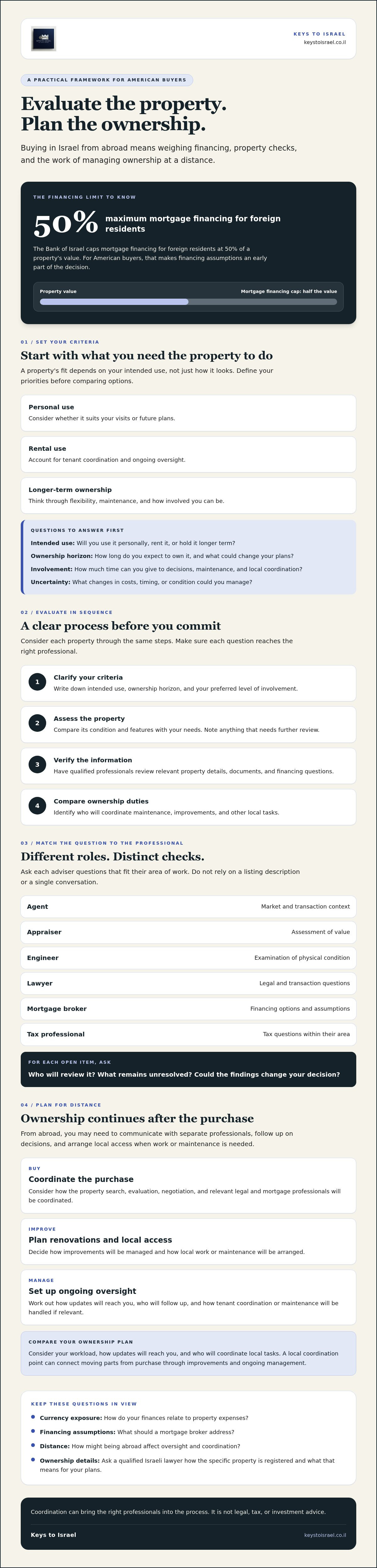
For American buyers, the Bank of Israel caps mortgage financing for foreign residents at 50% of a property’s value. That makes the decision bigger than choosing a property that looks promising. You need to understand how financing, due diligence, and distance fit together. If you’re unsure how to assess an unfamiliar market or coordinate local help, that’s a practical concern, not a reason to rush. This Israel property investment guide for Americans gives you a clear framework for comparing your options.
You’ll learn how to match your investment goals with property evaluation, professional checks, and the realities of ownership from abroad. We’ll also look at how purchase coordination, renovation management, and ongoing property management can fit into your plan. Keys to Israel coordinates the local professionals involved, so you don’t have to manage every provider separately.
Table of Contents
Israel property investment for Americans: define the plan before comparing properties
Start by deciding what you need the investment to do. A property for personal use may need to suit your visits or future plans. A rental property raises questions about tenant coordination and ongoing oversight. Longer-term ownership may require a different balance of flexibility, maintenance, and involvement. No use case guarantees a financial outcome, but each one changes what you need to evaluate.
Quotable takeaway: Your investment purpose sets the criteria for judging a property, from how you’ll use it to the work required to own it from abroad.
This israel property investment guide for americans starts with your purpose because a property that suits one plan may be a poor fit for another. Legal ownership details also deserve attention. For background, review Israeli property and land laws, then ask a qualified Israeli lawyer how the specific property is registered and what that means for your plans.
Which investment questions should Americans answer first?
Write down your answers before comparing individual properties:
Intended use: Will you use the property personally, rent it, or hold it for the longer term?
Ownership horizon: How long do you expect to own it, and what could change your plans?
Involvement: How much time can you devote to decisions, maintenance, and local coordination?
Uncertainty: What changes in costs, timing, or property condition could you manage?
Then list the questions you need qualified advisers to address: currency exposure between your finances and property expenses, financing assumptions, and how distance may affect oversight. A mortgage broker, lawyer, and tax professional can address their respective areas. Clarifying your questions early helps you compare properties with a realistic view of both the purchase and the responsibilities of remote ownership.
How to evaluate an Israeli property investment from the United States
Follow a consistent sequence: set your criteria, assess the property, verify the relevant information, then compare the responsibilities of owning it from abroad. This israel property investment guide for americans isn’t about finding one perfect checklist. It’s about making sure each question is considered by the right professional before you commit.
Clarify your criteria: Write down your intended use, ownership horizon, and preferred level of involvement.
Assess the property: Compare its condition and features with your needs, and note anything that requires further review.
Verify information: Ask qualified professionals to review relevant property details, documents, and financing questions.
Compare ownership duties: Identify who will coordinate maintenance, improvements, and other local tasks.
Coordination can bring the right professionals into the process, but it isn’t legal, tax, or investment advice.
What should remote buyers verify before committing?
Don’t rely on a listing description or a single conversation. Arrange independent professional review of the property’s condition, documentation, financing assumptions, and transaction questions. For each item, ask who will review it, what remains unresolved, and whether any findings could change your decision. For more detail on the purchase process, read the Israel property purchase guide for overseas investors.
If coordinating separate local professionals from the United States feels difficult, see how purchase coordination works. Keys to Israel helps coordinate the property search, evaluation, negotiation, and relevant legal and mortgage professionals.
Plan remote ownership before choosing an Israel investment property
A property that fits your plans on paper still needs a workable ownership plan. If you coordinate everything yourself, you’ll need to communicate with separate professionals, follow up on decisions, and arrange local access when work or maintenance is needed. A local coordination point can connect those moving parts from purchase through improvements and ongoing management. Compare the two approaches by considering your workload, how updates will reach you, and who will follow up on open tasks.
One local coordination point can reduce the need to chase separate providers and keep property decisions connected from purchase through ongoing ownership.
Build the plan around how you intend to use the property. Renovation oversight can include coordinating contractors and arranging inspections. Ongoing ownership may require a clear process for maintenance and, if you plan to rent the property, rental coordination. Before choosing a property, decide which situations need an in-person response, who will arrange it, and how you’ll receive updates. For official background on buying, consult the Israeli Government Guide to Buying an Apartment.
Who will handle improvements and ongoing property management?
For each task, identify the professional responsible for the work and the person who will coordinate access, questions, and updates. Keep technical decisions with the relevant professionals, and agree in advance how you’ll review recommendations remotely. The remote renovation management guide and overseas property management guide can help you think through these responsibilities.
A practical israel property investment guide for americans considers ownership after the purchase, not just the property itself. Keys to Israel coordinates renovation management with a vetted team of contractors and specialists, and provides property management for overseas owners, including inspections, maintenance, and rental coordination. To understand how that coordination works, get in touch about remote property ownership.
Make your next decision with a clear ownership plan
A sound Israel investment starts with your purpose, not a property shortlist. Define how you expect to use and hold the property, then have qualified professionals review its condition and documentation. Just as important, decide how improvements and ongoing ownership will be handled from abroad.
This israel property investment guide for americans shows why purchase decisions and ownership logistics belong in the same plan. You don’t need to coordinate every local provider alone. Keys to Israel offers a single coordination point across the purchase, renovation, and property management process, working with a vetted team of relevant local professionals. Direct legal, tax, and financing questions to qualified advisers.
If you’re weighing your next steps, talk to us about coordinating an Israel property investment. A clear plan can make a complex process easier to approach, one decision at a time.
Frequently Asked Questions
Can Americans invest in property in Israel?
Whether an American can purchase a specific property in Israel depends on the applicable ownership rules and the buyer’s circumstances. Before proceeding, ask a qualified Israeli lawyer to confirm eligibility and review the transaction. You should also ask qualified US and Israeli tax professionals about relevant tax and reporting questions. If you’re considering financing, speak with a mortgage broker about the options that may apply to you.
How should an American evaluate an investment property in Israel?
Start with your purpose for buying, then assess the property’s condition, documentation, financing assumptions, and ongoing ownership needs. Ask an appraiser or engineer to review relevant property questions, and have a lawyer examine legal and transaction details. This israel property investment guide for americans approach helps you compare properties against your own criteria rather than relying on appearance or projected returns alone.
Do Americans need a local representative to manage Israeli property remotely?
Whether you need a formal representative depends on your circumstances and the transaction, so ask an Israeli lawyer about any specific requirements. Even when you handle decisions yourself, local coordination can help arrange access, inspections, repairs, and communication with separate professionals. Consider your time, language needs, and ability to follow up from abroad. A coordinator can connect the professionals involved without replacing their specialist advice.
What should Americans plan for after buying property in Israel?
Plan who will coordinate improvements, inspections, maintenance, and rental arrangements if you intend to rent the property. Decide how local professionals will report progress, raise issues, and seek your approval before work proceeds. Also discuss ownership, tax, and reporting questions with qualified legal and tax professionals in the US and Israel. Planning these responsibilities before purchase can make remote ownership more manageable.


Comments